There are three main types of skin cancer: basal cell, squamous cell and malignant melanoma.
Although malignant melanoma is not the most common, it is the most deadly. More than 68,000 people will be diagnosed with melanoma this year, and more than 8,000 are likely to die. Melanoma is the most common form of cancer for young adults ages 25-29 years old. It is the second most common form of cancer for adolescents and young adults ages 15-29 years old. Unfortunately, the number of cases of melanoma is increasing. Many people do not realize that something on the skin can kill them, especially if it is small and has no symptoms, so please be cautious and aware and visit your dermatologist once a year for a skin check-up. Prevention is the best way to avoid melanoma.
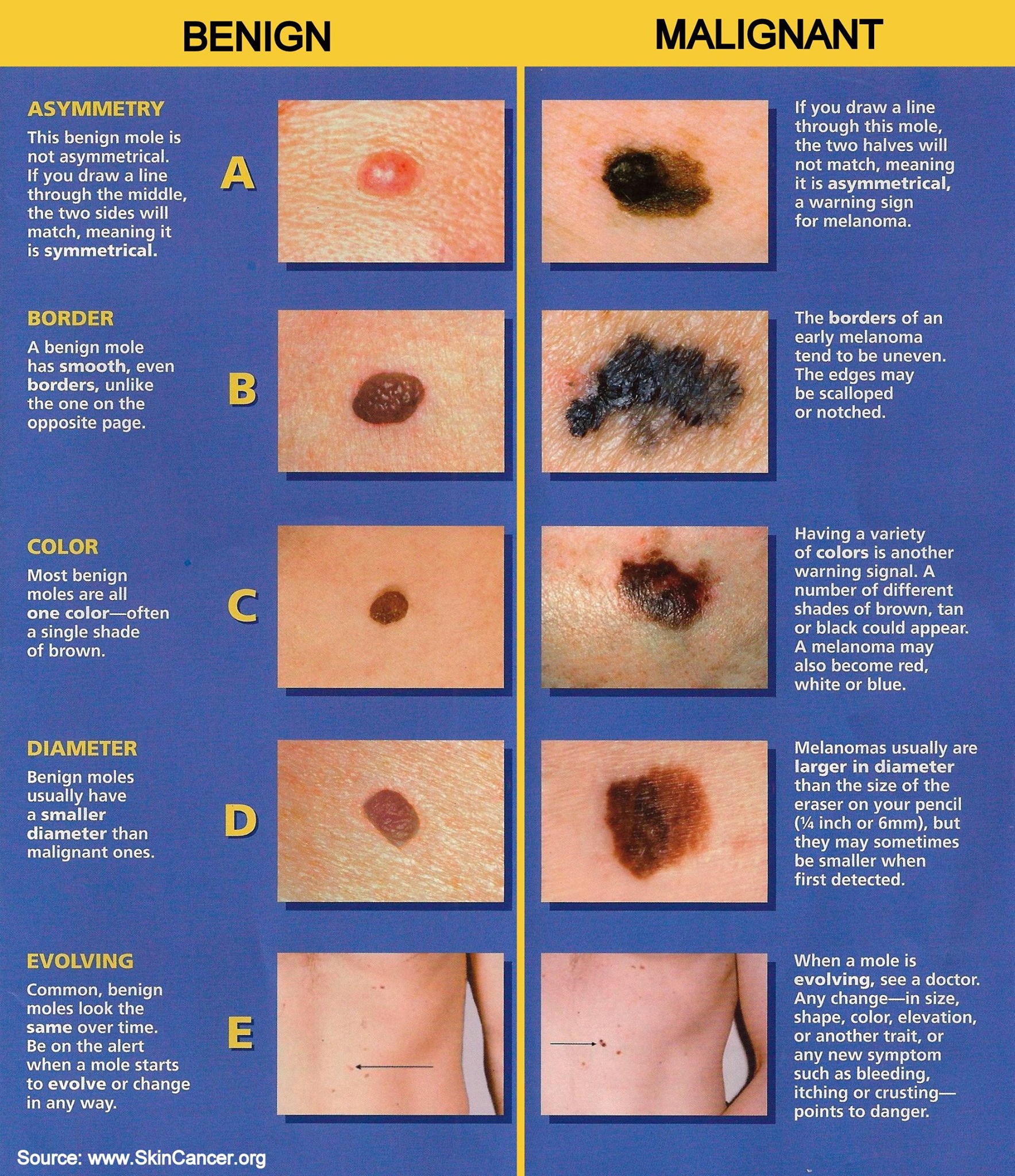
In order to identify a potential melanoma, pay attention to the ABCDE –
A – Asymmetry: One half is unlike the other half of the spot.
B – Borders: Melanomas will often have irregular or poorly defined borders.
C – Color: Look for varying colors throughout the spot. Colors may include red, brown, black, white or blue.
D – Diameter: If the spot’s diameter varies from one area to the other and has varying shades of color, these are signs of melanoma.
E – Evolving: A mole or skin lesion that looks different from the rest or is changing in size, shape or color, or a mole that is suddenly itchy, inflamed, bleeding or scabby should be examined by a doctor.
Mohs Surgery
Mohs Micrographic Surgery is the most advanced and effective treatment procedure for skin cancer available today. The procedure is performed by specially trained surgeons who have completed at least one additional year of fellowship training (in addition to the physician’s three-year dermatology residency and one year of medicine residency). Dr. Purvisha Patel and Dr. Julie Jefferson are both trained in Mohs surgery.
Mohs Micrographic Surgery is an effective and precise method for treating basal cell skin cancer, squamous cell skin cancers and other skin tumors.
Mohs Surgery Frequently Asked Questions